Euthanasia: Harish Rana Case
Euthanasia, commonly understood as the right to die with dignity, has emerged as one of the most important legal debates in India in 2026. For years, the issue remained largely theoretical, discussed in courtrooms and academic spaces without much real-world application. However, a landmark Supreme Court ruling in March 2026 has changed that position significantly.
The discussion has now shifted from abstract constitutional principles to practical questions. Courts, doctors, and families are now dealing with real situations involving end-of-life decisions. This has brought into focus the challenges of implementing rights, the role of medical professionals, and the urgent need for a clear legislative framework.
Euthanasia: Meaning and Types
Euthanasia refers to the intentional ending of a person's life to relieve suffering, particularly in cases of terminal illness or irreversible medical conditions. However, the law does not treat all forms of euthanasia in the same way, and understanding this distinction is crucial. It is broadly classified into:
1. Active Euthanasia
Active euthanasia involves a direct act to end life, such as administering a lethal injection. This form is illegal in India and is treated as a criminal offence, often falling under provisions relating to culpable homicide or abetment of suicide.
2. Passive Euthanasia
Passive euthanasia, on the other hand, involves withdrawing or withholding life-sustaining treatment, such as ventilators or artificial feeding. In such cases, death is not actively caused but allowed to occur naturally. This form of euthanasia is legally permitted in India, but only under strict safeguards.
3. Physician-Assisted Suicide (PAS)
A third category, physician-assisted suicide, involves a doctor providing the means for death while the patient performs the final act. This is not legally recognised in India.
The distinction between these categories is not merely technical. Indian law draws a clear line: it permits letting die in certain circumstances, but it does not allow causing death.
Pre-2026 Framework: Key Cases
India does not have a comprehensive statute governing euthanasia. Instead, the law has developed through judicial decisions under Article 21 of the Constitution, which guarantees the right to life and personal liberty.
The Supreme Court first addressed the issue in Gian Kaur v. State of Punjab (1996), where it held that there is no general right to die. However, the Court hinted that the right to life could include the right to die with dignity in certain contexts.
This idea was developed further in Aruna Shanbaug v. Union of India (2011), where the Court permitted passive euthanasia under limited conditions. This was the first time the Court formally recognised that life support could be withdrawn in exceptional cases.
The most significant development came in Common Cause v. Union of India (2018), where the Supreme Court explicitly recognised the right to die with dignity as part of Article 21. The Court also validated the concept of living wills, allowing individuals to specify their medical preferences in advance.
In 2023, the Court simplified the procedure for implementing living wills and reduced procedural barriers, making the framework more accessible in practice.
Harish Rana Case
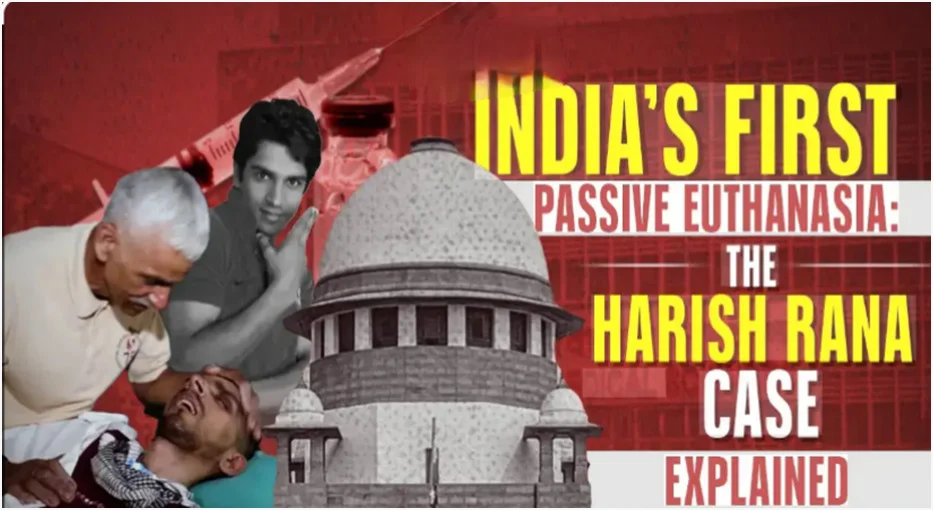
The turning point came in March 2026, when the Supreme Court in Harish Rana v. Union of India (2026) applied this framework in a real case involving a patient who had been in a vegetative state for over thirteen years.
In this case, the Court allowed the withdrawal of life-sustaining treatment. This marked the first meaningful implementation of India's passive euthanasia framework, moving the law from theory to actual enforcement.
The Court clarified that artificial nutrition and hydration are forms of medical treatment and can be withdrawn under appropriate circumstances. It emphasised that such decisions must be based on careful evaluation, including the irreversibility of the patient's condition, respect for the patient's dignity, and the opinion of medical experts through a properly constituted medical board.
Living Wills in India
A living will, also known as an advance directive, allows a person to decide in advance whether they want life-sustaining treatment in case they become incapable of making decisions in the future.
While the Supreme Court has recognised the validity of living wills, their implementation remains weak. In 2026, adoption rates are extremely low, and there is considerable confusion about the procedure across hospitals and states.
There is no uniform national registry for living wills, and many medical institutions lack clear protocols. As a result, a right that exists on paper is not easily accessible in practice. This highlights a broader issue in Indian law: recognition without institutional support often leads to ineffective enforcement.
Legal Challenges in India
1. No Comprehensive Legislation - Entire framework is judge-made
2. Complex Procedures - Multiple medical boards and judicial involvement slows decisions
3. Weak Implementation - No digital registry for living wills and lack of hospital-level protocols
Future of Euthanasia Law in India
The Supreme Court has clearly indicated that it is time for Parliament to step in and enact a comprehensive law on euthanasia.
Such a law must clearly define the distinction between active and passive euthanasia and establish safeguards to prevent misuse. It should also standardise procedures across the country and create institutional mechanisms, such as a national registry for living wills.
Importantly, any legal framework must integrate euthanasia with palliative care, ensuring that patients are not choosing death simply because they lack access to adequate medical support
The discussion has now shifted from abstract constitutional principles to practical questions. Courts, doctors, and families are now dealing with real situations involving end-of-life decisions. This has brought into focus the challenges of implementing rights, the role of medical professionals, and the urgent need for a clear legislative framework.
Euthanasia: Meaning and Types
Euthanasia refers to the intentional ending of a person's life to relieve suffering, particularly in cases of terminal illness or irreversible medical conditions. However, the law does not treat all forms of euthanasia in the same way, and understanding this distinction is crucial. It is broadly classified into:
1. Active Euthanasia
Active euthanasia involves a direct act to end life, such as administering a lethal injection. This form is illegal in India and is treated as a criminal offence, often falling under provisions relating to culpable homicide or abetment of suicide.
2. Passive Euthanasia
Passive euthanasia, on the other hand, involves withdrawing or withholding life-sustaining treatment, such as ventilators or artificial feeding. In such cases, death is not actively caused but allowed to occur naturally. This form of euthanasia is legally permitted in India, but only under strict safeguards.
3. Physician-Assisted Suicide (PAS)
A third category, physician-assisted suicide, involves a doctor providing the means for death while the patient performs the final act. This is not legally recognised in India.
The distinction between these categories is not merely technical. Indian law draws a clear line: it permits letting die in certain circumstances, but it does not allow causing death.
Pre-2026 Framework: Key Cases
India does not have a comprehensive statute governing euthanasia. Instead, the law has developed through judicial decisions under Article 21 of the Constitution, which guarantees the right to life and personal liberty.
The Supreme Court first addressed the issue in Gian Kaur v. State of Punjab (1996), where it held that there is no general right to die. However, the Court hinted that the right to life could include the right to die with dignity in certain contexts.
This idea was developed further in Aruna Shanbaug v. Union of India (2011), where the Court permitted passive euthanasia under limited conditions. This was the first time the Court formally recognised that life support could be withdrawn in exceptional cases.
The most significant development came in Common Cause v. Union of India (2018), where the Supreme Court explicitly recognised the right to die with dignity as part of Article 21. The Court also validated the concept of living wills, allowing individuals to specify their medical preferences in advance.
In 2023, the Court simplified the procedure for implementing living wills and reduced procedural barriers, making the framework more accessible in practice.
Harish Rana Case
The turning point came in March 2026, when the Supreme Court in Harish Rana v. Union of India (2026) applied this framework in a real case involving a patient who had been in a vegetative state for over thirteen years.
In this case, the Court allowed the withdrawal of life-sustaining treatment. This marked the first meaningful implementation of India's passive euthanasia framework, moving the law from theory to actual enforcement.
The Court clarified that artificial nutrition and hydration are forms of medical treatment and can be withdrawn under appropriate circumstances. It emphasised that such decisions must be based on careful evaluation, including the irreversibility of the patient's condition, respect for the patient's dignity, and the opinion of medical experts through a properly constituted medical board.
Living Wills in India
A living will, also known as an advance directive, allows a person to decide in advance whether they want life-sustaining treatment in case they become incapable of making decisions in the future.
While the Supreme Court has recognised the validity of living wills, their implementation remains weak. In 2026, adoption rates are extremely low, and there is considerable confusion about the procedure across hospitals and states.
There is no uniform national registry for living wills, and many medical institutions lack clear protocols. As a result, a right that exists on paper is not easily accessible in practice. This highlights a broader issue in Indian law: recognition without institutional support often leads to ineffective enforcement.
Legal Challenges in India
1. No Comprehensive Legislation - Entire framework is judge-made
2. Complex Procedures - Multiple medical boards and judicial involvement slows decisions
3. Weak Implementation - No digital registry for living wills and lack of hospital-level protocols
Future of Euthanasia Law in India
The Supreme Court has clearly indicated that it is time for Parliament to step in and enact a comprehensive law on euthanasia.
Such a law must clearly define the distinction between active and passive euthanasia and establish safeguards to prevent misuse. It should also standardise procedures across the country and create institutional mechanisms, such as a national registry for living wills.
Importantly, any legal framework must integrate euthanasia with palliative care, ensuring that patients are not choosing death simply because they lack access to adequate medical support

